
The Invisible Engine: Why Great Design Isn't Enough to Rank
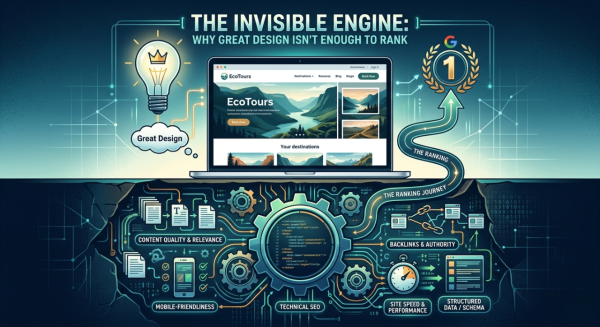
storytelling, the motion graphics are fluid and responsive, and your content is sharper than ever. It’s a site that looks and feels like a premium brand—yet, the traffic numbers tell a different story. You’re checking the analytics, waiting for a spike that never comes, and asking the ultimate question: If the site is this good, why is it invisible?
The “Aha!” moment comes when you realize that Google doesn’t operate like a design critic; it operates like a popularity engine. Search engines don’t just rank the “best-looking” site; they rank the most vouched-for site. You can have a world-class storefront, but if no one in the digital neighborhood is pointing toward your door, Google assumes you aren’t open for business. This is the power of Off-Page SEO. It is the transition from simply creating great content to building a digital reputation that search engines can actually trust.
Gemini said
In the digital ecosystem, your Digital Reputation is the collective opinion that search engines and users hold about your brand’s authority. It is the bridge between being a “known” entity and an “influential” one.
To understand this, imagine your website is a new brand of milk—let’s call it Milknest—sitting on a crowded supermarket shelf. Your on-page SEO and visual storytelling represent the packaging; it’s sleek, modern, and clearly labeled. However, a shopper standing in the aisle is overwhelmed by choices. They won’t reach for your bottle just because the label is pretty. They look to the shopkeeper (the Search Engine) to see which brand is placed at eye level, and they listen to the other customers in the aisle (Backlinks) who are pointing and saying, “That’s the one I trust.” Without those external recommendations, your premium product stays hidden behind established brands.
The “vouching” process is the essence of off-page SEO, but it comes with a warning: quality matters. If your brand is frequently associated with low-quality neighborhoods or suspicious characters, you develop a high Spam Score. Think of this as a “bad review” or a series of complaints whispered to the shopkeeper. Even if your “packaging” is perfect, a high Spam Score signals that you are an unreliable choice, eventually getting your product moved to the bottom shelf—or removed from the store entirely. Your goal is to build a reputation so strong that the shopkeeper has no choice but to put you front and center
1. Visual Guest Posting: The “Backlink Magnet”
As a storyteller, your greatest weapon is your canvas. Most guest contributors offer walls of text that take hours to edit. Instead, offer to create high-quality infographics or motion clips that explain a complex topic within another site’s niche. These visual assets are “backlink magnets.” When a blogger or news outlet embeds your motion graphic, they naturally link back to you as the original source. You aren’t just asking for a favor; you’re providing a premium asset that makes their content look better while securing a high-value link for yourself.
2. The “Unlinked Mention” Hunt
Sometimes, the digital world is already talking about you—you just haven’t claimed the credit. Someone might mention your digital growth expertise or your work with a brand like Milknest but forget to include a clickable link. By using monitoring tools, you can find these “unlinked mentions” and send a quick, polite email to the author. Thank them for the shoutout and suggest a link to help their readers find more context. It’s one of the easiest ways to turn a static mention into a powerful, authoritative backlink.
3. Niche Relevance Over Quantity
In the world of SEO, quality always beats volume. It is a common mistake to chase hundreds of links from random, generic directories. However, one link from a highly reputable marketing journal or a respected industry site is worth more than 100 links from irrelevant sources. If your focus is on digital growth, a link from a site within that specific “neighborhood” tells search engines that you are a trusted specialist. In the eyes of the algorithm, relevance is the ultimate currency of trust.
While building your authority is the goal, you must also guard against the technical red flags that can quietly sabotage your growth. Your Spam Score serves as an early warning system, and keeping it low is essential for long-term visibility. To maintain a clean reputation, you must strictly avoid “Link Farms”—those low-quality, automated directories that offer “thousands of links for $5.” These are a fast track to a search engine penalty.
Furthermore, ensure that your user experience remains a priority by keeping a healthy content-to-ad ratio. If a visitor (or a search bot) has to wade through layers of pop-ups and banners just to reach your insights on digital marketing or visual storytelling, your site will be flagged as low-value. Finally, never underestimate the power of basic trust signals; ensuring your “About” and “Contact” pages are clear and detailed proves to algorithms that there is a legitimate professional behind the screen. By focusing on these trust-building blocks, you ensure your site stays off the “bad review” list and remains a top-shelf choice for your audience.
Is your site struggling to gain traction? Comment below with your URL, and let’s look at your off-page presence together!
1 thought on “blog 3”